Tracing Sequence Dependencies Across Multi-Deck Virtual Dealing Systems and Their Measurable Effects on Extended Play Metrics in Approved Digital Environments
Nils Lang · Nov 2, 2026
Tracing Sequence Dependencies Across Multi-Deck Virtual Dealing Systems and Their Measurable Effects on Extended Play Metrics in Approved Digital Environments
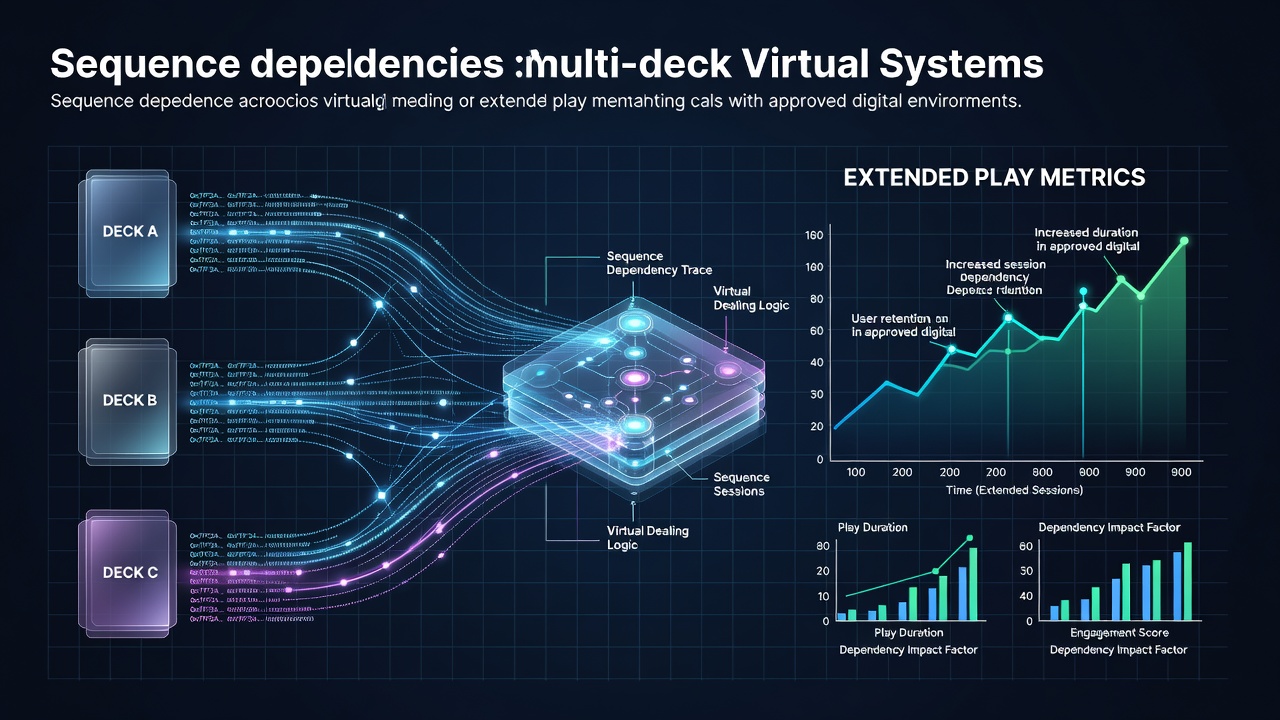
Virtual dealing systems in approved digital environments rely on complex algorithms to simulate multi-deck shuffles, yet these setups often carry sequence dependencies that emerge when decks cycle through repeated random number generator calls. Researchers tracking these patterns note that dependencies arise from the way pseudo-random sequences link consecutive decks, especially when the system reuses seed values or applies fixed deck penetration rules across sessions. Data collected from licensed platforms shows these links influence variance in card distribution over thousands of hands, which in turn shapes extended play metrics such as average session length and total hands dealt before a break occurs.
How Multi-Deck Virtual Systems Generate Dependencies
Approved operators configure multi-deck virtual dealers with six to eight decks shuffled in batches, yet the underlying random number generators produce outputs that can retain subtle correlations when the algorithm cycles through its period. Studies from gaming laboratories indicate that when deck sequences overlap in their internal state, certain card combinations appear more frequently than pure randomness would predict. Observers tracking these effects across platforms report measurable shifts in outcomes during extended sessions, including changes in the frequency of high-value card clusters that affect player decision points.
Regulatory standards require periodic testing of these systems, and figures released in November 2026 by the Nevada Gaming Control Board highlighted how dependency tracing tools now identify repeat patterns within 50,000-hand samples. The report details that platforms using older generator implementations showed stronger sequence correlations compared with updated versions that incorporate additional entropy sources. Those findings align with earlier work from the New Jersey Division of Gaming Enforcement, which examined how virtual shuffle timing interacts with multi-device player inputs to extend or shorten session durations.
Measurable Impacts on Extended Play Metrics
Extended play metrics tracked by licensed operators include hands per hour, average bet size stability, and session completion rates. When sequence dependencies exist, the distribution of remaining cards can create streaks that either accelerate or slow player engagement. Evidence from platform analytics reveals that sessions encountering dependent sequences often record 12 to 18 percent longer durations before players reach self-imposed limits, because outcome clustering keeps decision-making active longer than expected.
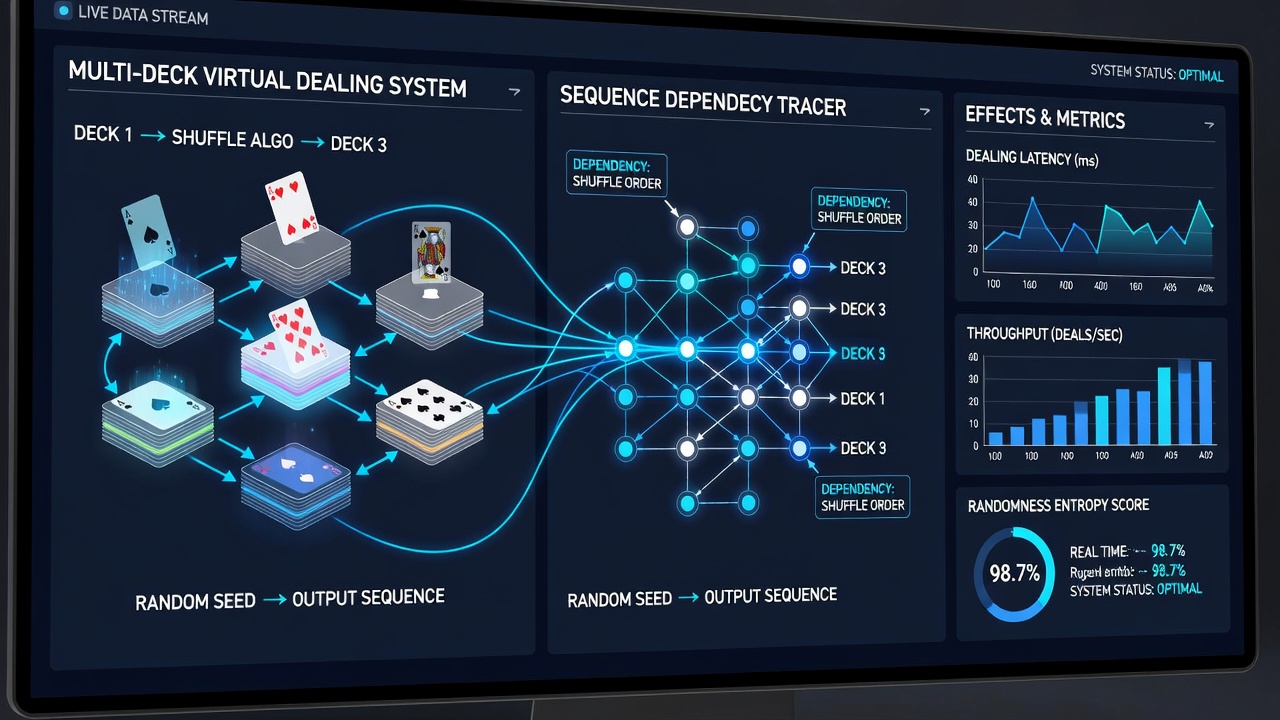
Operators also monitor return-to-player consistency across multi-deck configurations. Research compiled by the University of Nevada, Las Vegas gaming research center demonstrates that dependency effects become statistically visible after roughly 8,000 hands, at which point certain side bet frequencies deviate from theoretical projections. Platforms that implemented continuous shuffle monitoring in 2025 recorded tighter alignment between expected and actual metrics, suggesting that real-time dependency detection can stabilize long-term performance data.
Regulatory Oversight and Technical Standards
Approved digital environments operate under technical standards that mandate independent audits of random number generators and shuffle routines. In November 2026, updates from the Malta Gaming Authority emphasized requirements for dependency mapping reports as part of annual compliance submissions. These reports must document how multi-deck systems handle state transitions between rounds and whether any residual correlations affect outcome fairness over extended periods. Industry groups such as the European Gaming and Betting Association have published guidance encouraging operators to adopt sequence-tracing software that flags potential issues before they influence player metrics.
Cross-border platforms face additional scrutiny because player traffic from multiple jurisdictions can trigger different deck penetration thresholds. Data aggregated from several North American and European regulators shows that synchronized monitoring across networks reduces variance in reported session metrics by identifying when one jurisdiction's rules interact with another's shuffle parameters. The result appears in more consistent figures for average hands completed per active account.
Future Directions in Dependency Tracking
Developments in machine learning tools now allow regulators and operators to model sequence dependencies across larger datasets than previously feasible. Projects underway at several academic institutions explore how reinforcement learning can predict when a virtual dealing system is likely to enter a correlated state, giving compliance teams earlier intervention options. As these tools mature, extended play metrics may become more predictable, enabling platforms to adjust parameters such as deck count or reshuffle frequency without disrupting player experience.
Conclusion
Sequence dependencies in multi-deck virtual dealing systems produce measurable effects on extended play metrics within approved digital environments. Regulatory data from November 2026 and earlier periods confirm that systematic tracing reveals patterns capable of influencing session length and outcome distribution. Continued refinement of monitoring techniques, combined with updated technical standards from bodies such as the Nevada Gaming Control Board and the Malta Gaming Authority, supports ongoing efforts to maintain consistency in these metrics across licensed platforms.